
English| EUR
Suggested for you
More currencies
Choose a language
The katana's reputation rests on a forging method refined across seven centuries. Swordsmiths transformed raw iron sand into layered steel through controlled heating, folding, and differential tempering—a process that produced blades capable of holding both a razor edge and structural flexibility.
Quick answer
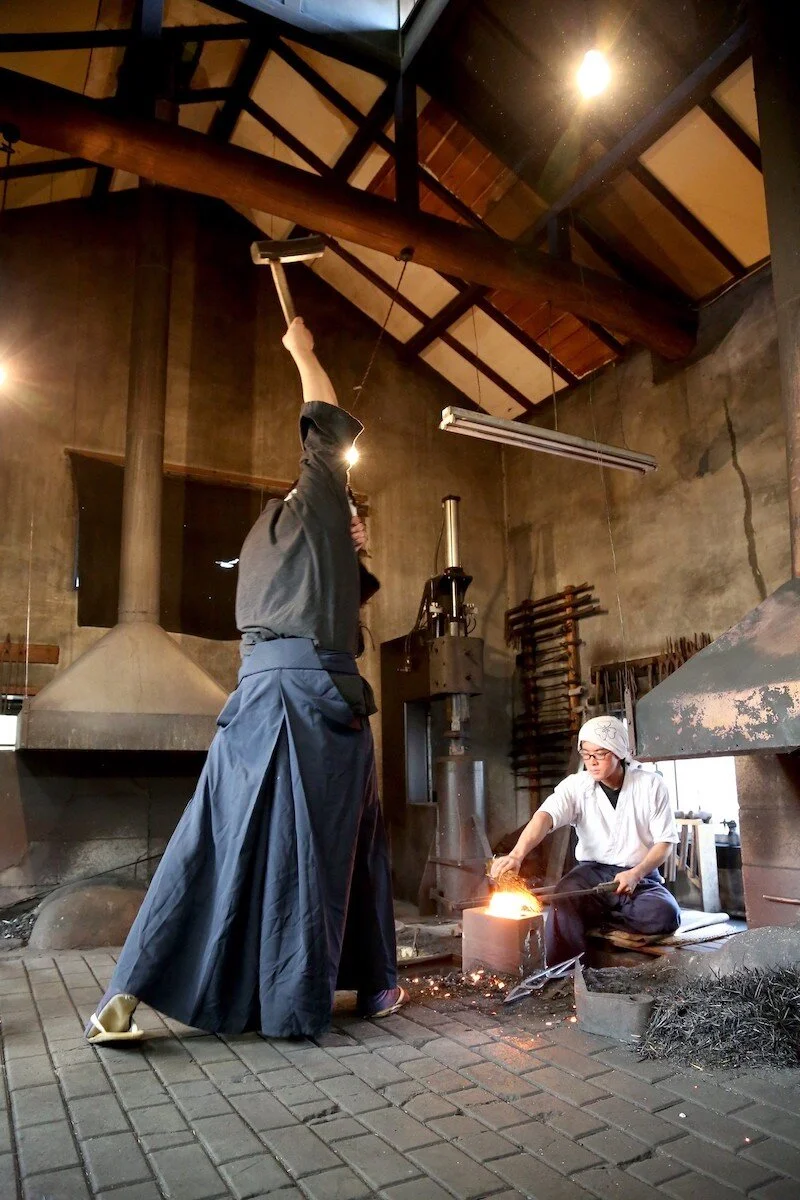
How were katanas forged? Traditional swordsmiths began with tamahagane steel smelted from iron sand in a tatara furnace, then folded the steel 10 to 15 times to eliminate impurities and create thousands of microscopic layers. The blade was shaped through repeated heating and hammering, clay-coated to control cooling rates, and quenched in water to produce the characteristic hardened edge and flexible spine. The entire forging process required 15 to 30 days of continuous work.
A katana blade begins as chunks of tamahagane steel—raw carbon steel smelted from satetsu iron sand in a clay furnace that burns at 1,300 degrees Celsius for three days. Swordsmiths sorted the cooled steel by carbon content, stacking high-carbon pieces for the edge and low-carbon steel for the core. The folding process that defined Japanese sword craft addressed a practical problem: tamahagane contained slag and inconsistent carbon distribution that would fracture under combat stress. How were katanas forged to achieve their famed durability? The smith heated the steel block to welding temperature, hammered it flat, folded it lengthwise, and forge-welded the layers together. Each folding cycle doubled the layer count—ten folds produced 1,024 layers, fifteen folds yielded 32,768. This repetition homogenized the carbon content and compressed the grain structure into a dense, resilient material. The hard steel formed the blade's outer jacket while softer steel formed the core, a composite structure called kobuse that prevented catastrophic shattering. After the billet reached the target layer count, the smith drew it into the katana's curved profile through controlled hammering, then ground the bevels and applied a thick clay slip to the spine and a thin coating to the edge. When the blade was heated to 750 degrees and plunged into water, the thin-coated edge cooled rapidly and hardened into martensite while the thicker-coated spine cooled slowly and remained flexible pearlite. This differential hardening created the visible hamon tempering line and gave the sword its structural paradox—a cutting edge hard enough to slice through bamboo and a spine ductile enough to absorb impact without snapping. The Ninja Experience facility in Nakagyo-ku displays historical forging tools and demonstrates steel-folding techniques used by Kyoto smiths during the Sengoku period. Visitors can examine tamahagane samples, watch short smithing demonstrations, and handle replica blades to feel the weight distribution that resulted from traditional forging methods. The museum is open daily from 09:00 to 18:30, with the final entry at 17:30. Arrival before midday ensures access to the scheduled guided sessions that explain the metallurgical principles behind each forging stage.
“Each folding cycle doubled the layer count—ten folds produced 1,024 layers, fifteen folds yielded 32,768.”
The katana emerged during Japan's Kamakura period, between 1185 and 1333, when mounted warriors demanded blades that could withstand cavalry combat. Earlier straight swords, modeled on Chinese imports, fractured under lateral stress. Swordsmiths in provincial forges began curving the blade and switching from single-steel construction to layered composites, a shift that defined how were katanas forged for the next seven centuries. By the fourteenth century, smiths in Bizen, Yamashiro, and Sagami provinces had refined differential hardening—coating the spine in thick clay while leaving the edge nearly bare—so that quenching produced a hard cutting surface and a resilient core in a single piece of steel. The Muromachi period, from 1336 to 1573, brought both technical peaks and the first mass-production pressures. Master lineages like the Masamune school perfected the hamon, the visible crystalline boundary between hardened and softer steel, turning it into a mark of lineage and skill. When civil war erupted in the late fifteenth century, demand for blades outpaced the capacity of traditional workshops. Smiths compressed forging cycles, and quality variance widened. The Tokugawa shogunate, established in 1603, imposed guild structures that standardized apprenticeships and revived ceremonial attention to tempering and polishing, even as actual battlefield demand collapsed. After the 1876 Sword Abolishment Edict banned public blade-carrying, forging nearly vanished. A 1906 imperial directive permitted smiths to work under cultural-preservation licenses, preserving techniques but severing the craft from its martial function. Post-war occupation authorities prohibited all sword production until 1953, when the Agency for Cultural Affairs reinstated licensed forging under strict documentation rules. Today, fewer than three hundred smiths hold active licenses in Japan. At the Ninja Experience facility in Kyoto's Nakagyo ward, visitors examine reproduction tantos and wakizashis that illustrate folding patterns, clay application zones, and the geometry of the kissaki point—material traces of a system that regulated steel, fire, and water with millimeter-level consistency across lineages and centuries.
Kamakura period smiths develop the curved, differentially hardened blade in response to mounted combat demands.
Muromachi workshops perfect the hamon and folding sequences; civil war drives mass production and quality divergence.
Tokugawa shogunate formalizes guild structures, standardizing apprenticeships and ceremonial tempering protocols.
Sword Abolishment Edict bans public blade-carrying, collapsing commercial forging across Japan.
Imperial directive permits licensed smiths to continue work under cultural-preservation framework.
Allied occupation prohibits all sword production; 1953 reinstatement allows licensed forging under Agency for Cultural Affairs oversight.
Fewer than three hundred smiths maintain active licenses; reproduction blades and museum exhibits preserve folding and tempering techniques for public study.
Traditional katana forging followed a multi-week process that transformed raw tamahagane steel into a blade through cycles of heating, folding, and differential hardening. Each stage required precise temperature control and years of apprenticeship to master.
Swordsmiths smelted iron sand in a clay furnace called a tatara for three days, producing tamahagane steel with varying carbon content. They sorted pieces by carbon level—high-carbon steel for the edge, low-carbon for the core—based on luster and fracture patterns.
The smith stacked thin plates of tamahagane, heated them to welding temperature in a charcoal forge, then hammered them into a single block. This billet was folded and hammered flat repeatedly—often 10 to 15 times—to homogenize the steel and create thousands of micro-layers.
Hard high-carbon steel was wrapped around a softer low-carbon core in a U-shape or sandwich configuration, then forge-welded together. The smith drew out this composite billet into the rough blade profile, leaving extra material at the edge for grinding.
A thick clay mixture was applied to the blade's spine and sides, with only a thin coat along the cutting edge. When the blade was heated to critical temperature and quenched in water, the edge cooled rapidly to form hard martensite while the spine remained flexible, producing the visible hamon temper line.
Rough grinding removed forge scale and refined the blade geometry on water stones. Final polishing progressed through finer natural stones—sometimes a dozen grades—to reveal the hamon, grain structure, and mirror finish that distinguished a finished katana.
The best arrival window is 09:00–17:30, as early arrival avoids peak crowds and ensures access to all daily scheduled guided sessions. Planning your visit during these hours allows for a consistent experience when exploring the details of katana forging.
—
Visiting on weekday mornings provides the quietest environment for viewing. This timing is ideal for those who prefer steady, uninterrupted observation.
Mild, 15°C to 23°C
Spring offers comfortable walking weather between visits. Booking ahead for these popular months remains necessary due to increased tourism.
Cool, 12°C to 20°C
Crisp autumn air complements a visit to the facility. Mid-week sessions during these months often see more manageable visitor numbers.
Verdict: Tuesday to Thursday, arriving at 09:00, during the months of April or October provides the most consistent access to scheduled sessions.
The katana forging exhibition operates daily throughout the week. Visitors can plan their attendance for any day from Monday through Sunday.
The facility is located in the Nakagyo-ku district of Kyoto at Teramachi Utanokoji Building 2/F, 292 Higashidaimonjicho. Visitors can reach the site easily via the local subway and bus networks.
Kyoto Municipal Subway Tozai Line to Kyoto Shiyakusho-mae Station
Kyoto City Bus to Kawaramachi Oike stop
Walk from Kyoto Shiyakusho-mae Station via Teramachi Street
Early arrival between 09:00 and 17:30 avoids peak crowds and ensures access to all daily scheduled guided sessions.
Everything you need to know about how were katanas forged
The traditional Japanese blade-making process involved folding layers of steel, known as tamahagane, to create a durable and sharp edge. The master smiths used charcoal fires and repeated hammering to remove impurities from the metal. This historical craft is a highlight for those researching the sword-smithing legacy of Japan.
The entrance fee is 3,300 JPY per adult, which includes the museum tour and various hands-on experiences. This fee covers all standard activities scheduled at the location.
Our facility provides insight into the historical techniques used by artisans. While we focus on the experience, you will gain a clear understanding of the metallurgical methods involved in the creation of these weapons.
The best arrival window is 09:00–17:30 to avoid peak crowds and ensure access to all daily sessions. We recommend planning your day accordingly to maximize your time at the facility.
Visitors often overlook that the steel composition was the most critical element in the structural integrity of the blade. Understanding these materials helps guests appreciate the final product presented during the exhibition.
Yes, younger visitors are welcome to explore the history of these iconic blades. Please ensure they are supervised throughout the guided museum tour and interactive portions of the visit.