Ninja Weapon Forging Kyoto
Tours & tickets

Hand-picked by our editors — only the best 5 forging workshops from 47 reviewed.

Open today 09:00–18:00
Attendance: Moderate — summer season
Arrive by 16:00 to ensure enough time for the full forging workshop.
Free cancellation Instant confirmation Mobile voucher Verified partner Book now, pay later
Tickets

Choose your ticket

Verified partners for every tour, free cancellation where available, and instant confirmation on every booking.

Forge Your Own Ninja Weapon with Traditional Tin Casting 2 hr 30 min
Standard Entry

Forge Your Own Ninja Weapon with Traditional Tin Casting

5 (132)
€92
per person
Instant Mobile voucher Flexible — change up to 24h

Melt and mold authentic metal weaponry using centuries-old Japanese metalworking techniques in central Kyoto.

Reserve
Traditional Knife Forging Workshop in Kyoto 3 hr
Standard Entry

Traditional Knife Forging Workshop in Kyoto

4.9 (842)
€129
per person
Instant Mobile voucher Flexible — change up to 24h

Hammer glowing steel into a handcrafted blade using centuries-old Japanese blacksmithing techniques.

Reserve

Prices from verified partners. Availability updates in real time at checkout. Free cancellation policies apply where shown.

What you'll do

Inside a tour, step by step

  1. 01 15 min

    Check-in

    Arrival and briefing in the lobby

Highlights

What you'll see inside the attraction

The landmarks, rooms, and views travelers on this tour remember — all visible on a single visit.

The Master Forge

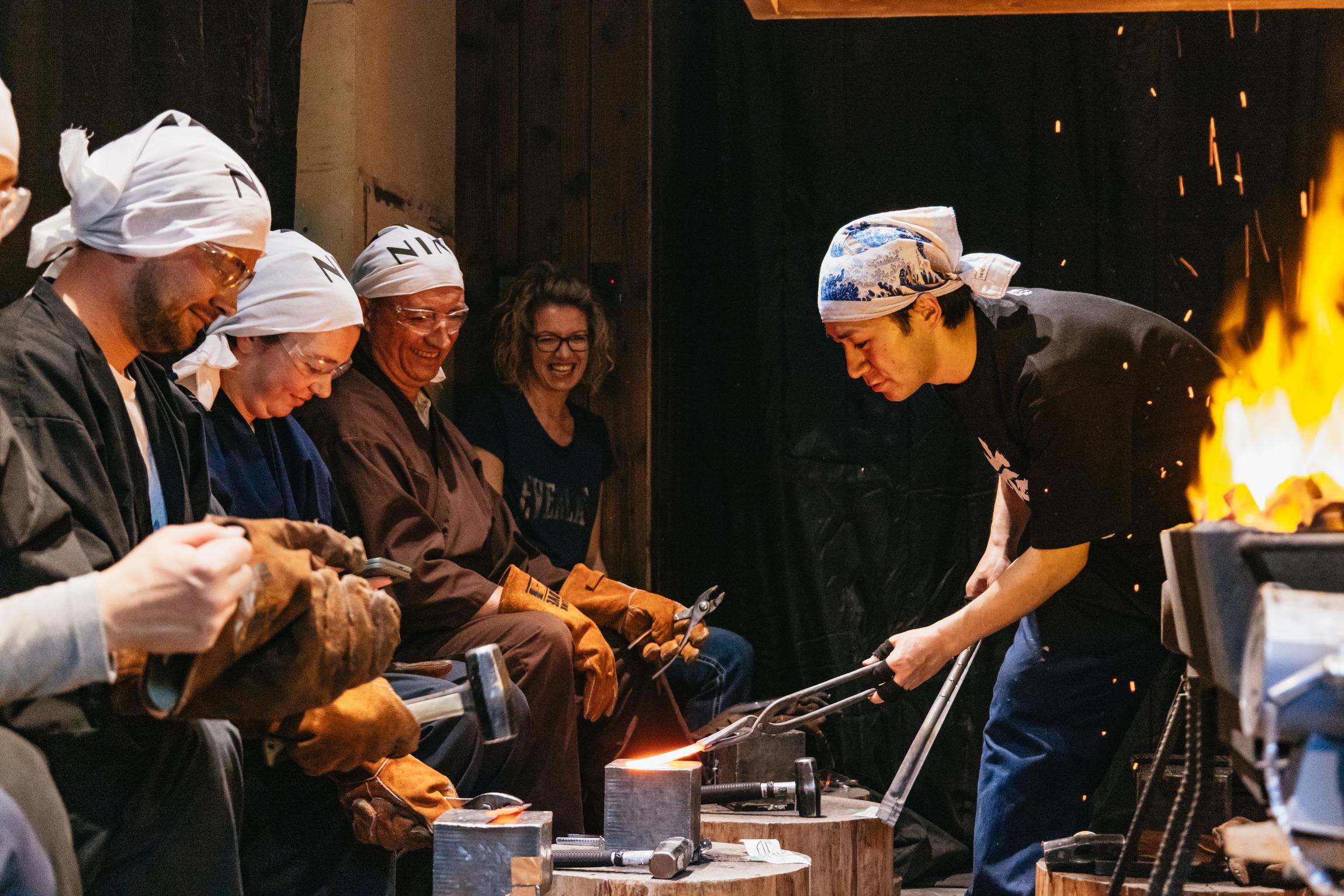
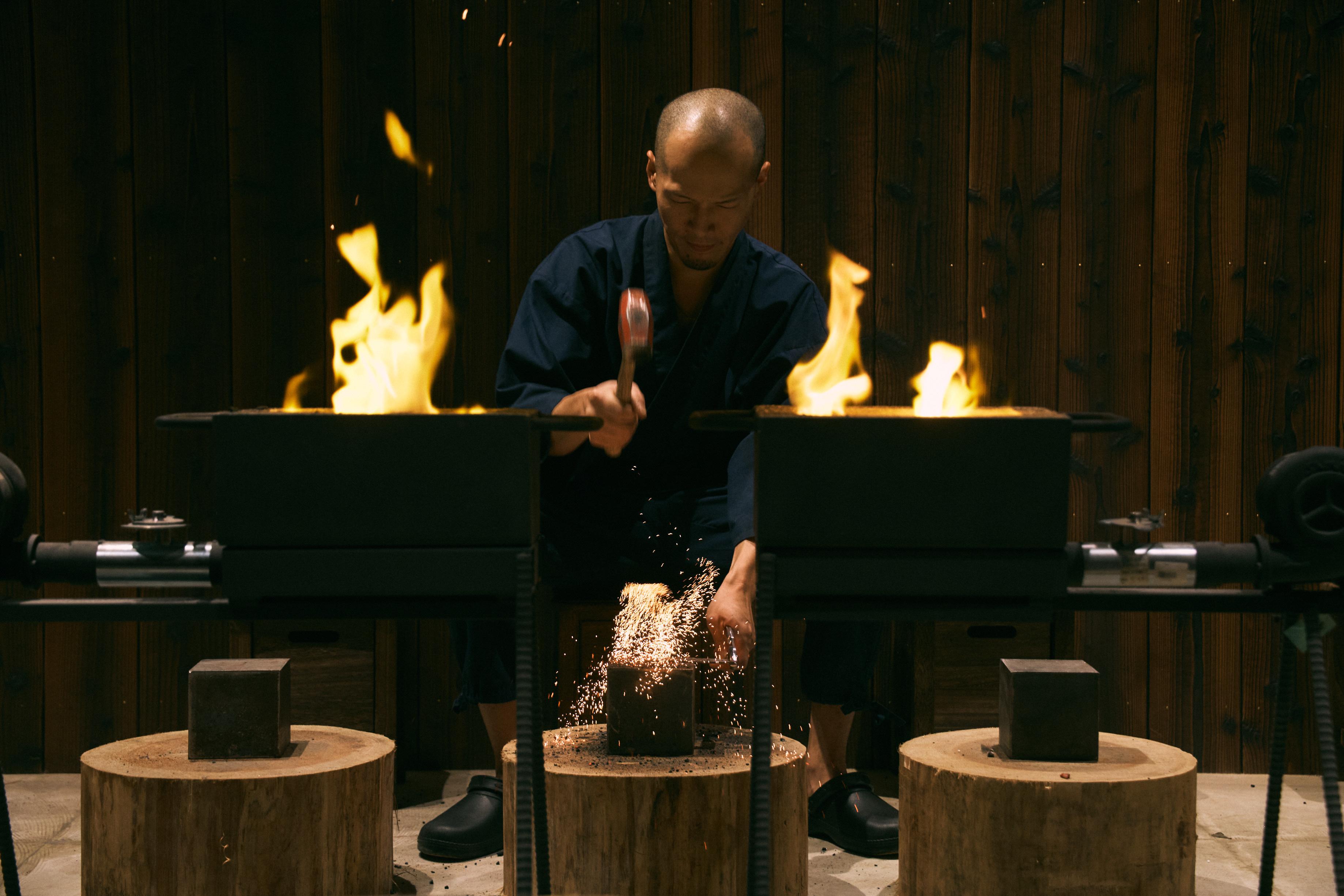
Watch the glowing steel take shape under the guidance of a master smith.

Head to head

Authentic Ninja Weapon Forging Experience in Kyoto vs. Samurai Sword Training

They complement each other; most visitors who do both call the forging workshop the more meditative option, while the samurai training is more physically active. Selecting the right authentic ninja weapon forging experience in kyoto tour depends on whether you prefer static craftsmanship or dynamic martial arts training.

Feature Top pick Ninja Forging Samurai Training
Primary Focus
Martial arts and kata
Skill Level Required
Beginner to intermediate
Physical Intensity
High; requires active movement
Output Product
Certificate of completion
Duration
1.5–2 hours
Cultural Connection
Bushido code and swordplay

Verdict: Choose the authentic ninja weapon forging experience in kyoto tickets if you value tangible metalwork, or opt for samurai training if you seek to master traditional Japanese sword movements.

How your ticket works

Book your ticket in 3 steps

  1. 01

    Book online

    Choose your ticket, select your date, and reserve in under two minutes. Secure checkout handled by our verified partner.

  2. 02

    Receive your mobile voucher

    Instant confirmation by email, with a mobile voucher you can save offline. No printing, no queuing at a collection desk.

  3. 03

    Show & enter

    Arrive at the entrance, show your voucher on your phone, and walk in. Most tickets include priority or skip-the-line access.

Plan your visit

Everything you need to know before you go

Practical details for your visit straight from our verified partners — hours, access, rules, and how to get there.

Open today · 09:00–18:00
Opening hours
09:00–18:00
Address
Sagatenryūji Susukinobabachō, 3−25−2, Ukyo Ward, Kyoto, 616-8385, Japan
Accessibility
Full facility access for most mobility needs
Best arrival
09:00–17:00
Storage
Secure lockers provided on-site
Navigation
Located in the Ukyo Ward district
Mon
09:00–18:00
Tue
09:00–18:00
Wed
09:00–18:00
Thu
09:00–18:00
Fri
09:00–18:00
Sat
09:00–18:00
Sun
09:00–18:00
Main entrance

Ninja Experience

Sagatenryūji Susukinobabachō, 3−25−2, Ukyo Ward, Kyoto

Follow signage to the forge annex

Address
Sagatenryūji Susukinobabachō, 3−25−2, Ukyo Ward, Kyoto, 616-8385, Japan
Storage
Secure lockers provided on-site
Navigation
Located in the Ukyo Ward district

How to get there

🚆
Public transport · 15 min · Low cost

Take the JR Sagano Line to Saga-Arashiyama Station.

Dress code

Participants wear a provided samue, a traditional blacksmith uniform, for safety and immersion. A tenugui headband is also included as part of your authentic ninja weapon forging experience in kyoto.

Bags & security

Personal belongings must be stored in provided lockers before entering the forge. Security staff monitor the workshop area to ensure all safety protocols are followed.

Photography

Photography is encouraged in designated areas after the forging process is complete. Please refrain from using cameras while handling hot steel during your authentic ninja weapon forging experience in kyoto.

Accessibility

The forge area is ground-level and accessible for most visitors. Please contact the operator in advance if you require specific assistance during your authentic ninja weapon forging experience in kyoto.

Mobile phones

Mobile phones should be kept in lockers during the active forging portion of the session. You are welcome to retrieve them to capture images of your final handcrafted blade.

What to bring

  • Comfortable clothes
  • Close-toed shoes
  • Booking confirmation
  • Photo ID
  • Hair tie for long hair

Not allowed

  • Open-toed shoes
  • Large backpacks
  • Loose scarves
  • Flammable liquids
  • Sharp outside objects
  • Alcohol
  • Professional lighting rigs
  • Tripods
  • Large cameras

Families & strollers

The authentic ninja weapon forging experience in kyoto is ideal for families with older children. Children must be supervised at all times due to the presence of high-heat equipment.

Food & drink

No food or drink is permitted inside the forge studio. Water stations are available in the museum lobby before or after your authentic ninja weapon forging experience in kyoto.

Pets

No pets are allowed inside the studio or museum premises. Service animals must be cleared with the operator prior to your authentic ninja weapon forging experience in kyoto.

Good to know

Each session provides personal protective equipment. Follow all instructions from the master smith to ensure a safe authentic ninja weapon forging experience in kyoto.

Meeting point

Where to find us

Ninja Experience

Sagatenryūji Susukinobabachō, 3−25−2, Ukyo Ward, Kyoto

Follow signage to the forge annex

Get directions
Around your visit

Everything else worth knowing

Best time to go, insider tips, nearby landmarks, and the cancellation fine print — flip through to skim what matters to you.

Best time to visit

How crowds, weather, and events shift across the year.

Spring

Mild weather perfect for visiting local landmarks.

Helpful tips for your visit

Small details that turn a good visit into a great one.

Book early

Reserve your slot weeks in advance as the forge has limited capacity.

Nearby landmarks

Non-bookable sights within a short walk — free to visit, easy to pair.

Tenryu-ji

5 min

A major Zen temple featuring beautiful gardens and historic architecture.

Cancellation policy

Flexible, no hidden fees.

Full refunds are available for cancellations made within the operator's specified window. Note that the 0 JPY entrance fee does not apply to paid workshops.

Where to stay

Hotels & districts near the attraction

Hand-picked options within walking distance — pick a district for vibe, or a specific hotel for convenience.

Arashiyama Benkei

5 min
luxury

Traditional ryokan with authentic Japanese hospitality.

About

The place, in context

Japan's shinobi arsenals were never forged in mountain caves by masked warriors. They were cast and hammered in the same urban workshops that produced farm tools, temple bells, and samurai armor — utilitarian metalwork hidden in plain sight. Kyoto's foundries supplied feudal lords with tanto blades and shuriken discs for five centuries, and the tin-casting methods practiced in Arashiyama today trace directly to Edo-period guild records preserved in the city's Crafts Archive. The authentic ninja weapon forging experience in Kyoto revives these lost techniques, placing visitors at anvils and casting benches where artisans once shaped weapons in secrecy. Modern workshops occupy machiya townhouses in Ukyo Ward, their latticed facades concealing forges fueled by charcoal and gas. The curriculum mirrors apprentice training from the 1600s: pouring molten tin into sand molds to cast shuriken, then filing edges by hand until the throwing star balances symmetrically. Blade forging workshops introduce hammer welding and differential hardening — the process that gives Japanese steel its signature curve and edge retention. Each session runs ninety minutes to two hours, supervised by licensed metalsmiths who demonstrate tamahagane folding and quenching in oil baths. Participants leave with finished weapons: four-pointed shuriken, kunai daggers, or short tanto knives wrapped in washi paper. Arashiyama's ninja houses anchor the experience in historical context. The Sagatenryūji district sheltered covert operatives during the Sengoku period, when Kyoto served as a neutral meeting ground for rival clans. Weapons had to be portable, concealable, and manufacturable without arousing suspicion — constraints that shaped shinobi metallurgy. Casting replaced forging for small projectiles because it required no hammer strikes, no telltale noise. Tin melted at lower temperatures than steel, allowing nighttime production in residential kilns. These practical considerations, not martial mystique, defined ninja weaponcraft. The workshops teach that unglamorous reality: metalwork as problem-solving, craft as survival. Kyoto's forging revival began in 2018 when the Arashiyama Preservation Society partnered with the National Crafts Museum to document surviving casting molds and smithing jigs. The initiative trained twelve artisans in historical techniques, then opened public workshops to fund ongoing research. Today the authentic ninja weapon forging experience in Kyoto operates daily, merging tourism with living heritage. Visitors work beside blacksmiths who still hand-forge kitchen knives for Kyoto's ryotei restaurants, ensuring the skills remain embedded in commercial practice rather than performance. The metal you hammer today will hold an edge for decades — proof that these methods were never theatrical.

"Weapons had to be portable, concealable, and manufacturable without arousing suspicion — constraints that shaped shinobi metallurgy."
Your experience

What a tour day looks like

A step-by-step walkthrough of the visit — what you'll see, how long each stage takes, and the details that matter.

You arrive at a timber-framed machiya in Sagatenryūji before 9 AM, when the forge is still cold and the instructor lays out crucibles and tongs on a blackened workbench. The first hour is tin casting: you ladle molten metal from a clay pot into a sand mold carved with the four-armed silhouette of a shuriken. The pour takes three seconds. You wait two minutes for the tin to solidify, then crack open the mold and pull out a rough star, still warm enough to make your gloves smoke. Filing comes next — forty strokes per edge, checking balance with a spindle jig until the shuriken rotates without wobbling. Blade forging begins after a tea break. You select a steel blank pre-cut to tanto length, then hammer it over a gas forge while the instructor corrects your angle and rhythm. Ten heats, ten hammer sessions. The steel curves as you work, its spine thickening while the edge thins. Quenching happens in a trough of rapeseed oil; the blade hissses and the oil ignites briefly, a blue flicker across the surface. You grind the edge on a water stone, testing sharpness against a sheet of washi paper. The instructor wraps your finished blade in cloth and stamps the handle with the workshop's clan seal. You leave through the same wooden gate, carrying a weapon that required no electricity, no modern alloy — only fire, hammer, and forty generations of transmitted knowledge.

Frequently asked

Frequently asked questions about authentic ninja weapon forging experience in kyoto tours

What are the opening hours for the authentic ninja weapon forging experience in kyoto?

The Ninja Experience is open daily from 09:00 to 18:00.

Is there an entrance fee for the Ninja Experience?

The entrance fee is 0 JPY, though specific workshops like the weapon forging experience require a separate booking and fee.

Are children allowed at the authentic ninja weapon forging experience in kyoto?

Children are welcome but must be supervised at all times during the forge workshop.

How do I book tickets for the authentic ninja weapon forging experience in kyoto?

You can secure your spot by booking through the official website or verified tour operators.

Can I take photos during my authentic ninja weapon forging experience in kyoto?

Photography is permitted in specific areas but restricted during the active use of the forge.

What is the best time to arrive for an authentic ninja weapon forging experience in kyoto?

The best arrival window is 09:00–17:00 to avoid crowds and ensure sufficient time for the workshop.

Is the authentic ninja weapon forging experience in kyoto wheelchair accessible?

Yes, the facility is designed to accommodate various mobility needs; contact the operator for specific requirements.

What should I bring to my authentic ninja weapon forging experience in kyoto?

Bring comfortable clothing, close-toed shoes, and your booking confirmation to your authentic ninja weapon forging experience in kyoto.

Can I cancel my authentic ninja weapon forging experience in kyoto booking?

Cancellations are subject to the operator's policy; please check your specific booking confirmation for refund terms.