
English| EUR
Suggested for you
More currencies
Choose a language
Hand-forged katana pricing spans a vast range, from entry-level blades under ¥200,000 to museum-grade swords exceeding ¥3,000,000. The cost reflects materials, forging technique, smith lineage, and the weeks or months invested in each stage from smelting to final polish.
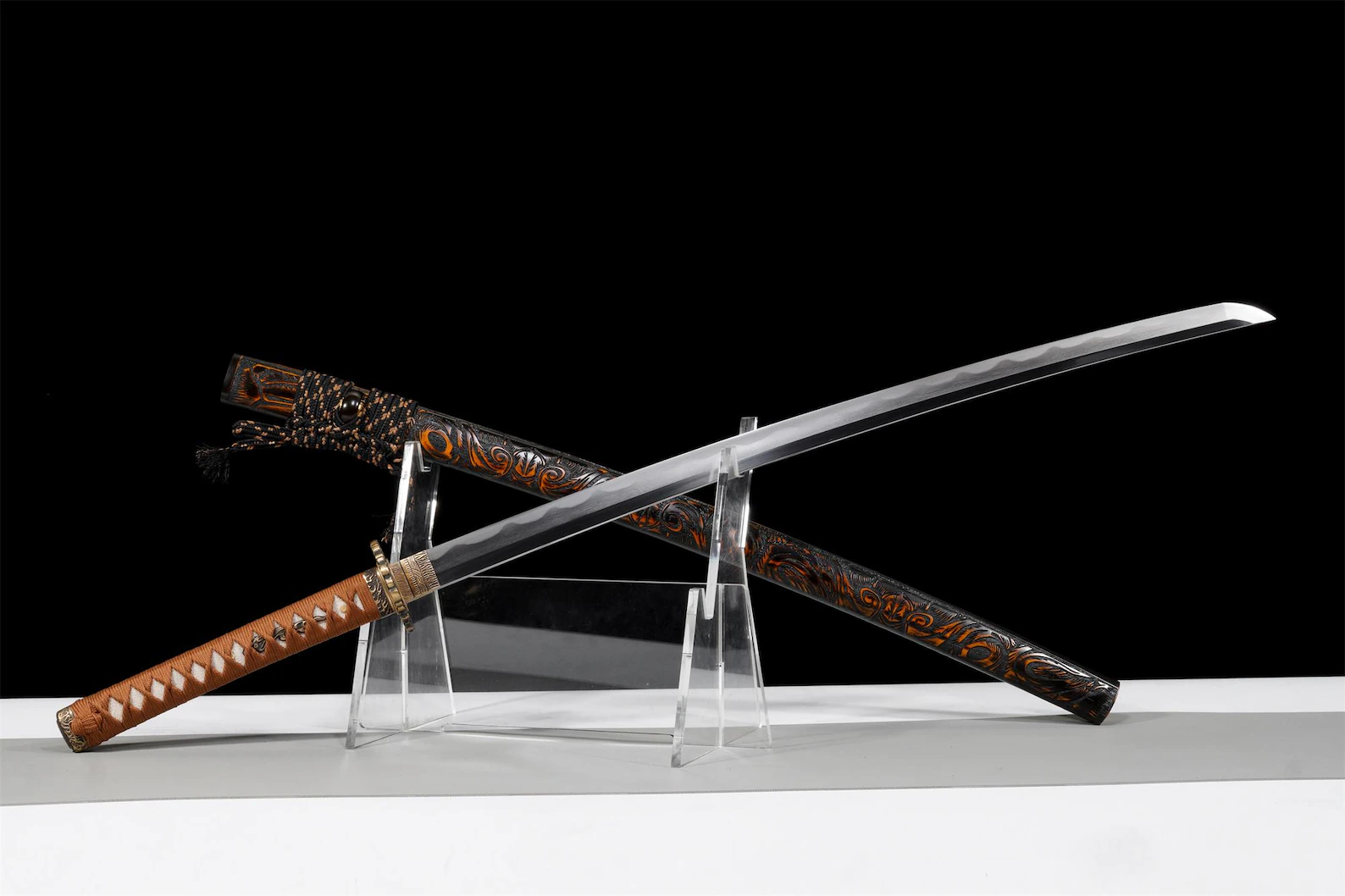
Quick answer
How much is a hand forged katana depends on steel type, smith reputation, and production time. Entry-level hand-forged blades using modern steel start around ¥150,000–¥300,000. Mid-tier swords forged with tamahagane by experienced smiths range ¥500,000–¥1,200,000. Master-class nihonto from licensed smiths with waiting lists often exceed ¥2,000,000, and antique or historically significant pieces command prices well above ¥5,000,000.
A single hand-forged katana can require more than two hundred hours of labor, and the price reflects every stage of that process. The steel itself sets the floor: tamahagane, the traditional ore smelted in a tatara furnace, costs significantly more than modern high-carbon alternatives, and its scarcity drives prices upward. Smiths fold and forge the billet dozens of times to achieve the layered structure that defines a nihonto, and each heat cycle demands precision timing and temperature control. Beyond the forging, differential hardening creates the blade's distinctive hamon—the visible temper line along the edge—and that step alone can determine whether a sword is functional or collectible. After quenching, the blade moves to a polisher, whose work over days or weeks reveals the steel's grain and the smith's signature in the tang. Fittings, handle wrapping, and scabbard construction add increments to the final cost, and a hand-carved tsuba or custom lacquer finish can double the price of the mountings. Reputation compounds every variable. A newly licensed smith working under the Japanese Swordsmith Association produces blades priced in the mid-six figures, while a living national treasure commands ten times that sum. Waiting lists for top-tier smiths stretch years, and collectors treat their output as investment-grade art. Antique blades carry premiums tied to provenance and historical attribution, with signed works from the Kamakura or Muromachi periods crossing into eight-figure territory at auction. For those exploring the craft rather than commissioning a blade, facilities like the Ninja Weapon Museum in Kanazawa offer demonstration forging experiences and curated displays explaining how tamahagane, folding technique, and heat treatment translate into value. The museum opens daily from 10:00 to 17:00 at 2-26-1 Nomachi, Kanazawa, with free facility entry and hands-on classes charged separately. Visitors arriving between 10:00 and 16:00 ensure time to participate in scheduled workshops before closing. Understanding handmade katana pricing begins with seeing the process firsthand, where the hours invested and the skill required make the figures legible.
“A single hand-forged katana can require more than two hundred hours of labor, and the price reflects every stage of that process.”
Admission to the facility is free of charge. The cost of acquiring a hand-forged katana is independent of facility entry and depends on metallurgical complexity, smithing duration, and material quality.
Verdict: Visitors pay 0 JPY for facility entry, while the price of individual hand-forged weaponry is determined by the artisan based on specific project requirements.
The value of a hand-forged katana is determined by the extensive labor, material purity, and traditional techniques required to create a functional work of art. These blades represent centuries of metallurgy refined by master swordsmiths.
The creation of a traditional katana begins with tamahagane, a high-quality carbon steel produced in a tatara furnace. This process involves smelting iron sand and charcoal over several days to achieve the required carbon content.
Through the process of folding the metal repeatedly, smiths remove impurities and distribute carbon evenly. This manual labor can result in over a thousand microscopic layers, contributing to the blade's structural integrity and aesthetic grain pattern known as hada.
Swordsmiths apply a specific clay mixture to the blade before heating and quenching it in water. This differential hardening process creates the hamon, or temper line, which marks the boundary between the hard edge and the flexible spine.
In Japan, the production of katanas is regulated by the Agency for Cultural Affairs to preserve traditional techniques. Only licensed smiths authorized to use the traditional tatara method produce blades recognized as authentic nihonto.
After forging, the blade undergoes a meticulous polishing process that can take weeks to complete. A professional polisher uses various grades of stones to reveal the hamon and refine the geometry of the blade, which is essential for both performance and value.
The value also encompasses the koshirae, or external mounts, including the tsuba (guard), tsuka (handle), and saya (scabbard). These components are often crafted by specialized artisans, adding further labor and material costs to the final piece.
The facility is open daily to provide information and educational resources regarding traditional craftsmanship. Visitors are welcome to explore the exhibits throughout the week during the following hours.
The facility is located in the Nomachi district of Kanazawa, Ishikawa. Visitors can reach the museum by public transport or taxi, with the local bus network providing the most direct access to the area.
Hokutetsu Bus to Nomachi Station bus stop
JR Hokuriku Main Line to Kanazawa Station, then transfer to Hokutetsu Railway
Direct from Kanazawa Station
The address is 2-26-1, Nomachi, Kanazawa, Ishikawa 921-8031, Japan. Please refer to the official site at https://ninjaweaponmuseum.jp/ for specific map coordinates to assist your driver or navigation.
To properly research the factors influencing hand forged katana pricing, the best arrival window is 10:00–16:00. Arriving during this period avoids the mid-afternoon peak and provides sufficient time to engage with educational materials.
—
Quiet conditions allow for detailed study of forging techniques and pricing variables.
Mild temperatures, 10°C to 20°C
Cherry blossom season attracts more visitors, necessitating earlier arrival within the window.
Cooler air, 12°C to 22°C
Clear weather often increases visitor volume, making mid-morning arrival advisable for focused learning.
—
Expect significant congestion which may limit time for in-depth inquiries regarding craftsmanship and costs.
Verdict: The best time to visit is Tuesday to Thursday between 10:00 and 12:00 during April or October.
Everything you need to know about how much is a hand forged katana
Determining how much is a hand forged katana depends on the smith's expertise, the quality of tamahagane steel used, and the complexity of the heat treatment. Prices reflect hours of labor spent on traditional folded steel techniques rather than mass production methods.
Authentic blade pricing is rarely fixed as it reflects specific artistry, provenance, and the time required to complete the polish and mountings. When researching how much is a hand forged katana, collectors often find that custom commissions carry higher valuations due to unique specifications.
The cost fluctuates based on the tempering process, such as the application of clay for a real hamon line. Because every piece is unique, understanding how much is a hand forged katana requires evaluating the skill of the artisan and the rarity of the materials.
Entry-level training pieces utilize different techniques than high-end martial arts grade weaponry, which influences the final price point significantly. We focus on educational displays of these metallurgical processes at our facility rather than direct retail sales of finished blades.
The facility provides free entry to explore our exhibits and learn about traditional iron and steel metallurgy. While specific hands-on experiences or classes incur individual fees, viewing the informative displays regarding blade creation does not cost anything.
Entrance to the facility is 0 JPY. While you can study the history of nihonto and the smithing process at no charge, fees for specialized weapon experiences are managed separately through our booking system.