2 hr 30 min
Ninja Weapon Forging Workshop in Kyoto
Forge your own shuriken or kunai with traditional blacksmithing techniques guided by expert artisans
Reserve
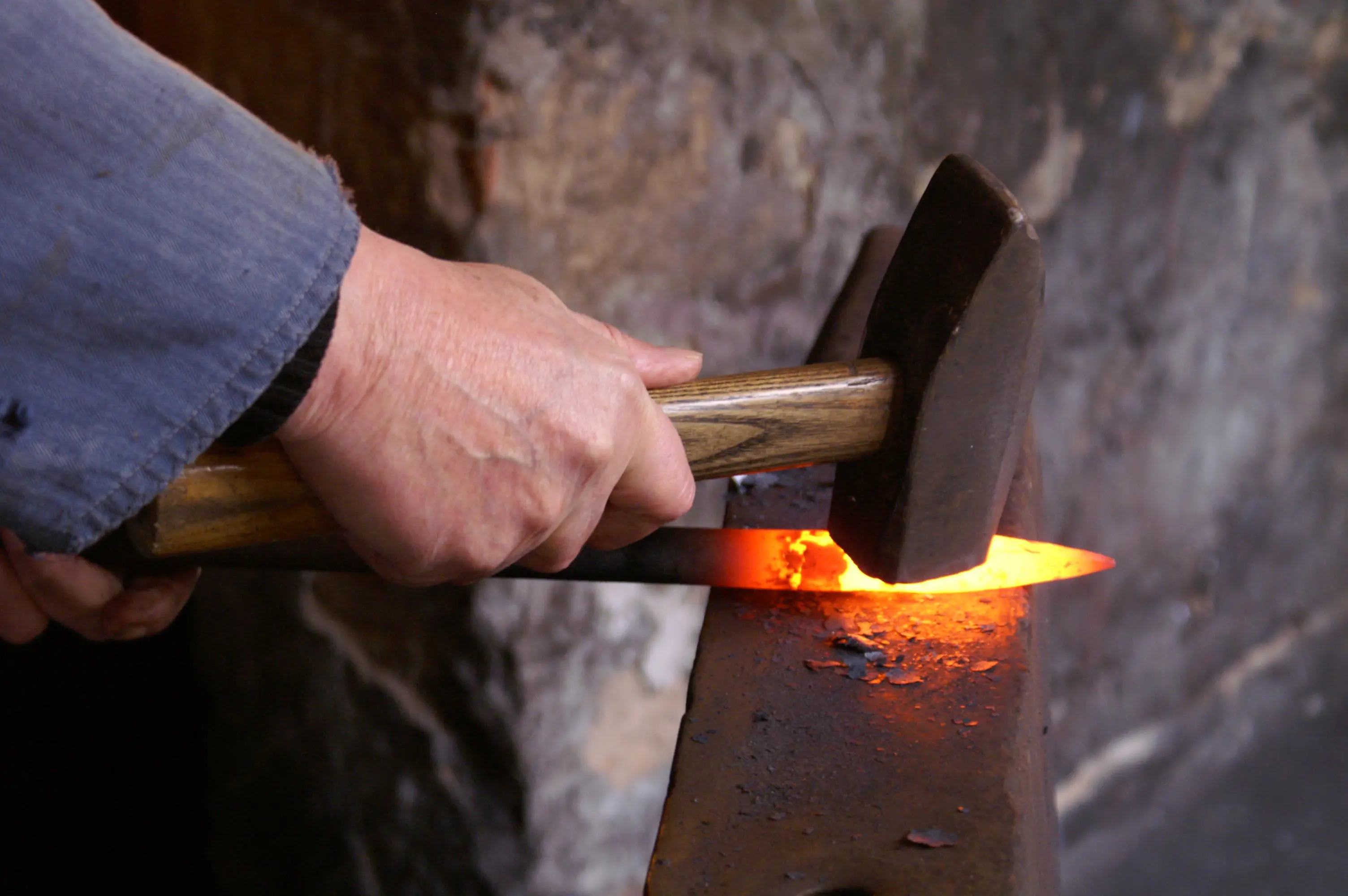
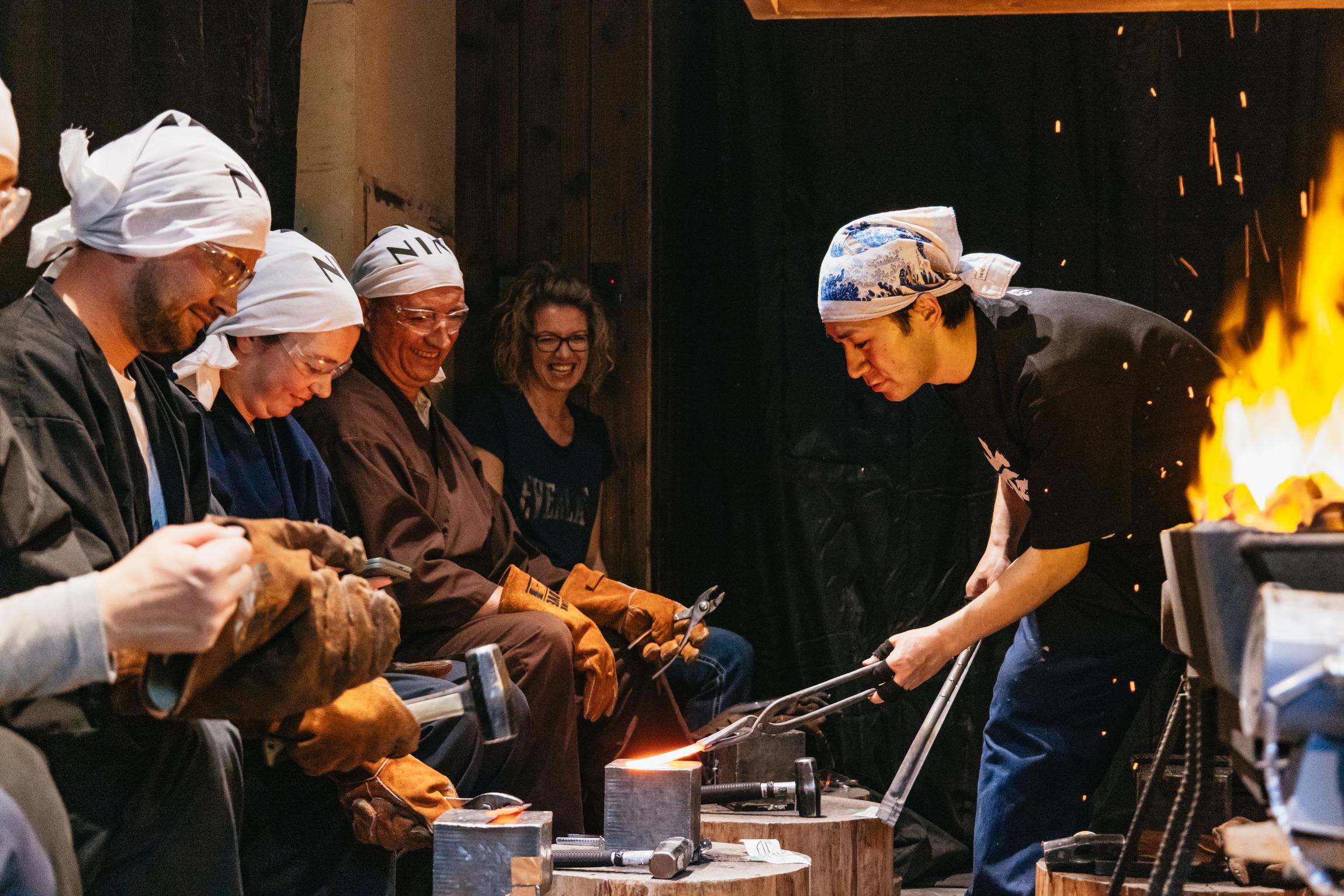
Hammer shuriken and kunai in a working studio, under the eye of a master bladesmith.
Hand-picked by our editors — only the best 3 forging experiences from 12 reviewed.
Verified partners for Ninja Weapon Forging Kyoto tours, free cancellation where available, and instant confirmation on every booking.
2 hr 30 min
Forge your own shuriken or kunai with traditional blacksmithing techniques guided by expert artisans
Reserve
2 hr 30 min
Cast your own authentic ninja tool from molten tin using centuries-old Japanese metalworking traditions
Reserve
1 hr
Pour molten metal and forge your own shuriken in a traditional casting workshop hidden in Arashiyama
ReservePrices from verified partners. Availability updates in real time at checkout. Free cancellation policies apply where shown.
Every Ninja Weapon Forging Kyoto tour side-by-side — duration, what's included, how you redeem.
| Experience | Duration | Rating | Guide | Small group | Free cancel. | Price | |
|---|---|---|---|---|---|---|---|
|
Standard Entry Most popular
Ninja Weapon Forging Workshop in Kyoto
|
2 hr 30 min | ★ 4.8 | — | ✓ | ✓ | €124 | Book → |
|
Standard Entry
Ninja Weapon & Shōgun Mask Crafting Workshop
|
2 hr 30 min | ★ 5.0 | ✓ | — | ✓ | €92 | Book → |
|
Standard Entry
Metal Ninja Weapon Casting Workshop at Arashiyama Ninja House
|
1 hr | ★ 4.9 | — | — | ✓ | €16 | Book → |
All prices from verified partners. Availability and exact terms confirmed at checkout.
The forging workshop offers a deep dive into traditional craftsmanship for those wanting hands-on labor, while the museum provides a broader cultural overview through observation and exhibits.
| Feature | Top pick Ninja Experience | Samurai & Ninja Museum |
|---|---|---|
Activity Level |
High physical participation | Low physical interaction |
Primary Focus |
Metalworking and smithing | Historical exhibits and weaponry |
Historical Context |
Specific to sword craft | Broad samurai culture history |
Skill Acquisition |
Hands-on blacksmithing techniques | Cultural knowledge retention |
Duration |
2.5 hours | 1–1.5 hours |
Suitability for Children |
Best for older youth | Suitable for all ages |
| See tickets → |
Verdict: Choose the ninja weapon forging kyoto tour if you prefer active creation over the passive viewing provided by standard ninja weapon forging kyoto tickets or museum visits.
Choose your ticket, select your date, and reserve in under two minutes. Secure checkout handled by our verified partner.
Instant confirmation by email, with a mobile voucher you can save offline. No printing, no queuing at a collection desk.
Arrive at the entrance, show your voucher on your phone, and walk in. Most tickets include priority or skip-the-line access.
Practical details for Ninja Weapon Forging Kyoto tickets straight from our verified partners — hours, access, rules, and how to get there.
Sakyo Ward, Kyoto
Confirmed upon booking
Open in Google MapsUse Kyoto City Bus to reach Sakyo Ward area.
Direct drop-off at the studio location.
Wear comfortable clothing and closed-toe shoes suitable for a workshop environment. Avoid loose sleeves or dangling jewelry that could interfere with forging tools.
Large luggage is not permitted inside the workspace. Secure your personal belongings before beginning your ninja weapon forging kyoto session.
Photography is permitted during the ninja weapon forging kyoto process. Respect the privacy of instructors and other participants when capturing your work.
The studio in Sakyo Ward may have limited mobility access due to traditional architectural features. Please verify specific requirements before booking your ninja weapon forging kyoto tickets.
Keep mobile phones stored away during the active forging portions of the session. Use them only during designated breaks in the ninja weapon forging kyoto itinerary.
This activity is best suited for adults and older teenagers due to the use of heavy tools. Children must be supervised at all times during any ninja weapon forging kyoto tour.
Eating and drinking are prohibited in the forging area to maintain safety. Enjoy refreshments before or after your session in the surrounding Sakyo Ward area.
Animals are not allowed inside the studio premises. Please make alternate arrangements for your pets before your arrival.
The 22,000 JPY fee includes all necessary materials and safety gear for the 2.5-hour session. Ensure you arrive within the recommended window to fully participate in the ninja weapon forging kyoto process.
Best time to go, insider tips, nearby landmarks, and the cancellation fine print — flip through to skim what matters to you.
How crowds, weather, and events shift across the year.
High humidity; bring water for the studio environment.
Cooler temperatures make for a comfortable crafting experience.
Indoor workshop remains warm despite outdoor temperatures.
Cherry blossom season often increases local foot traffic.
Small details that turn a good visit into a great one.
Spaces fill up quickly for these limited capacity workshops.
Prioritize grip and safety over fashion for the forge floor.
Eat a light meal beforehand to maintain energy during the process.
Have a translation app ready if you do not speak Japanese.
Plan to visit nearby temples after your 2.5-hour session.
Non-bookable sights within a short walk — free to visit, easy to pair.
A historic Zen temple known for its dry sand garden.
Famous for its large torii gate and expansive gardens.
A scenic stone path following a canal with trees.
A prominent museum featuring local and modern works.
Flexible, no hidden fees.
Full refunds are typically available if cancelled within the window specified on the official booking platform. This covers the 22,000 JPY experience price per person.
Hand-picked options within walking distance — pick a district for vibe, or a specific hotel for convenience.
Convenient access to local transit and the studio.
High-end hotels with extensive dining options.
Affordable options for extended stays.
Japanese bladesmithing divides into two traditions: the courtly katana lineage documented in imperial records, and the utilitarian shuriken and kunai forged by rural smiths for shadow operatives who left no heraldry.
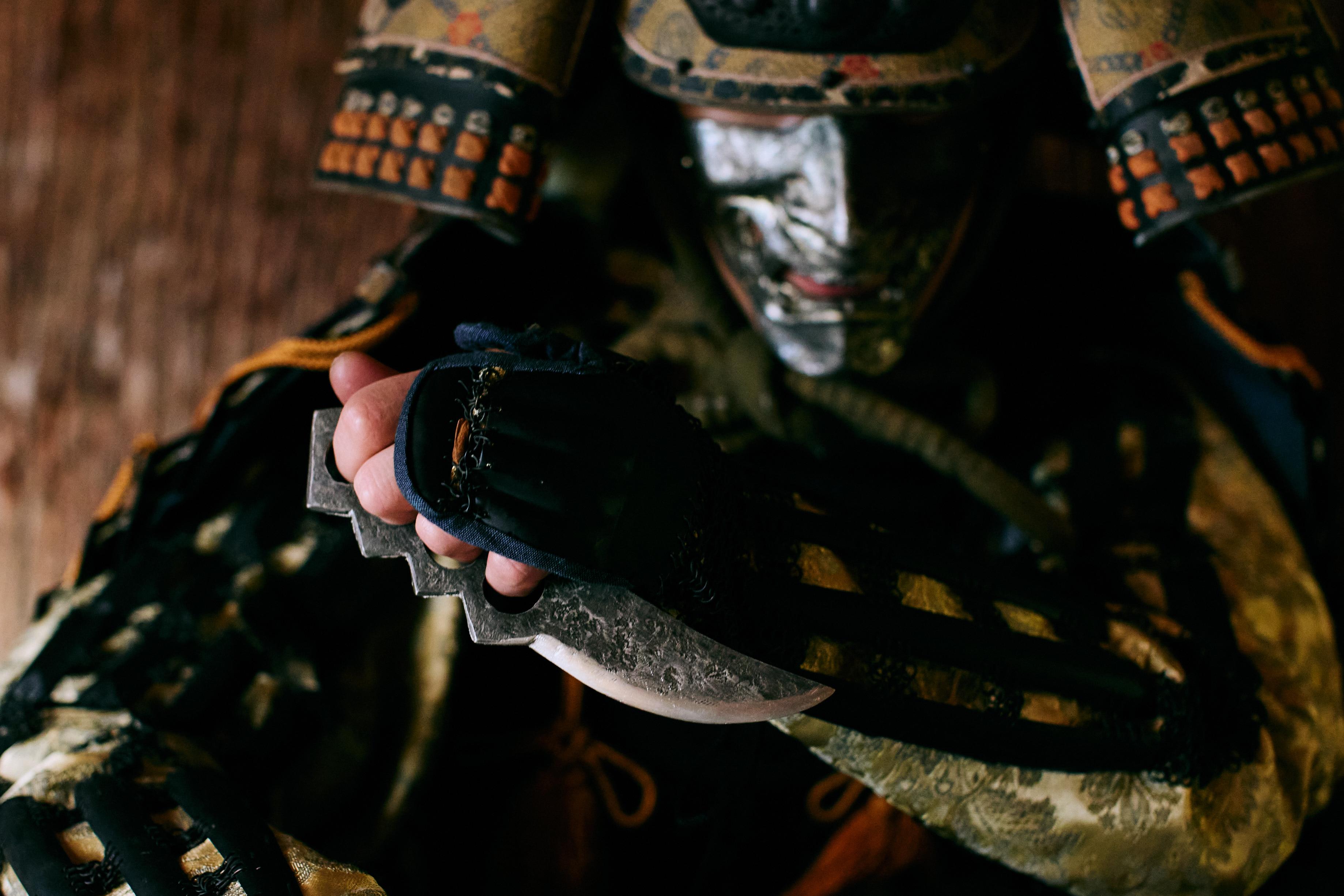
While samurai swords required weeks of folding and tempering to satisfy daimyo patrons, ninja weapon forging in Kyoto focused on speed, secrecy, and function. A throwing star needed balance more than polish. A climbing spike demanded a sharp taper and a grip that would not slip in rain. These tools were made in small forges tucked into mountain valleys, where a smith could work without drawing attention from the shogunate's inspectors.
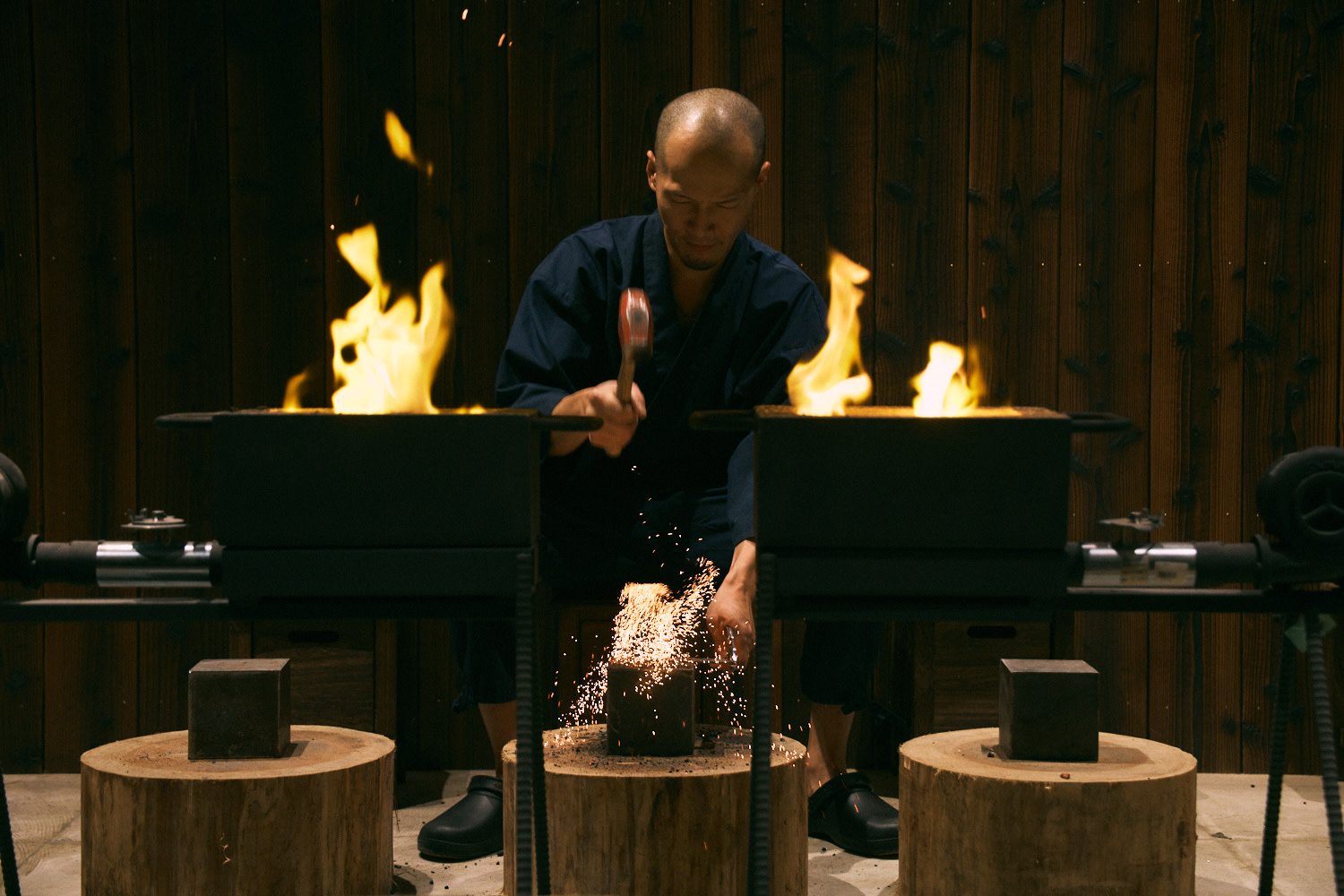
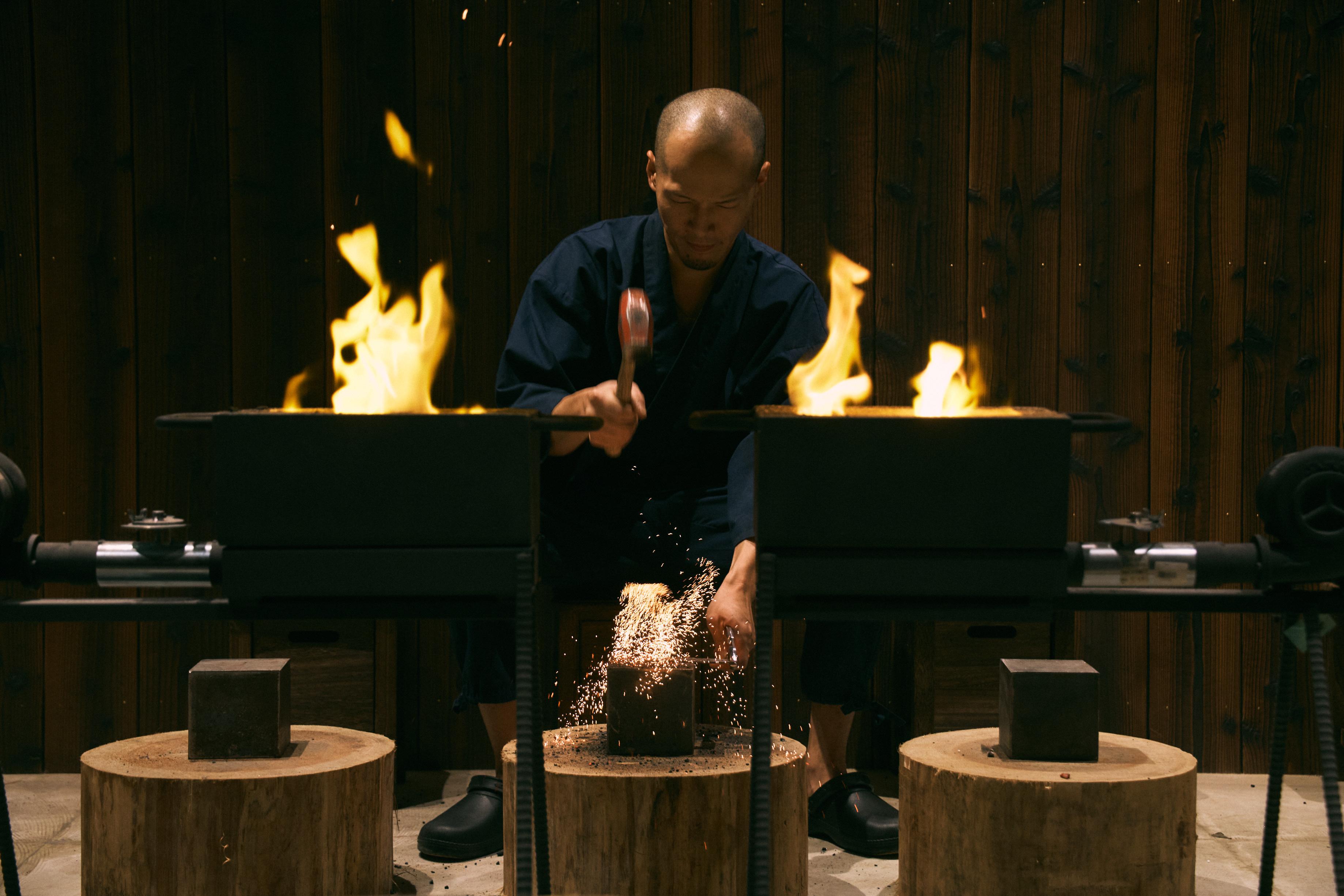
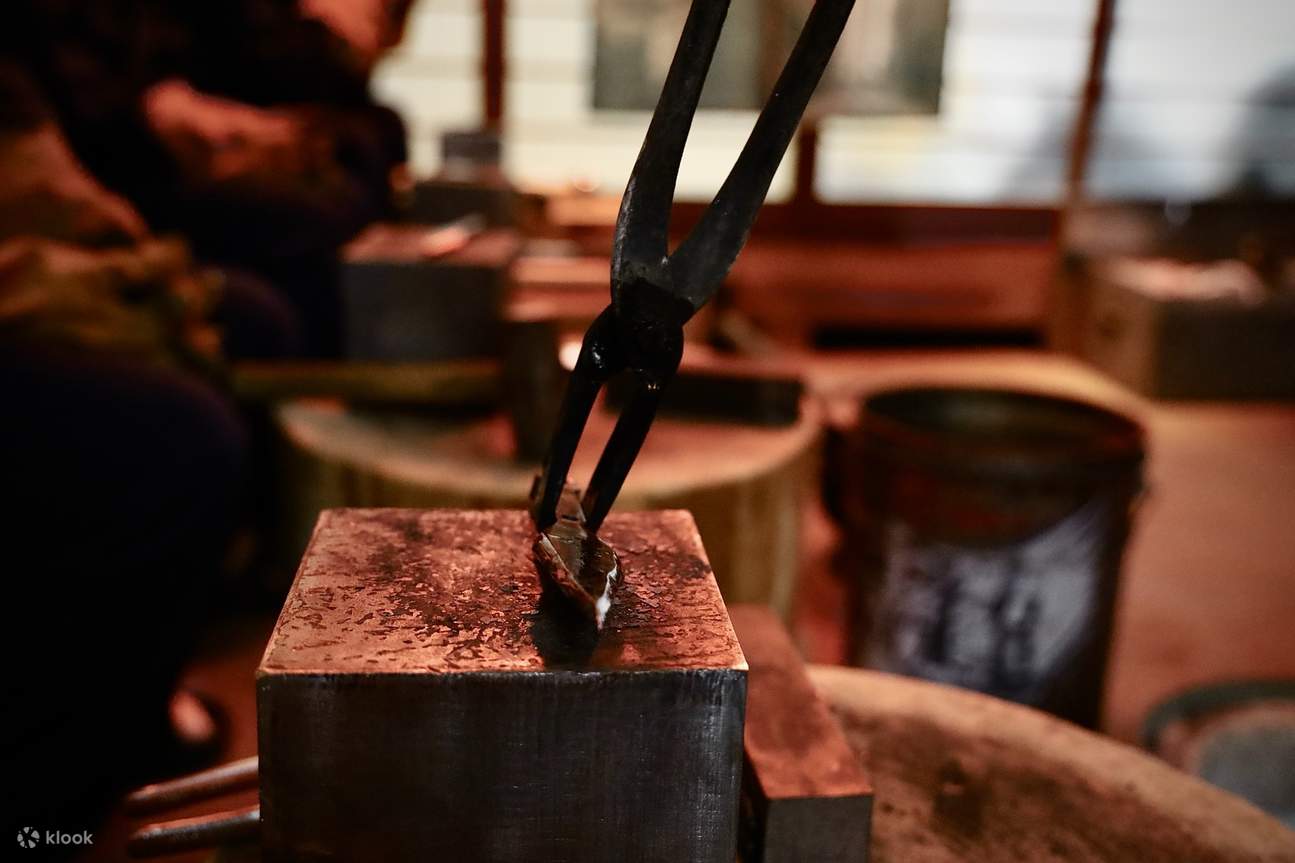
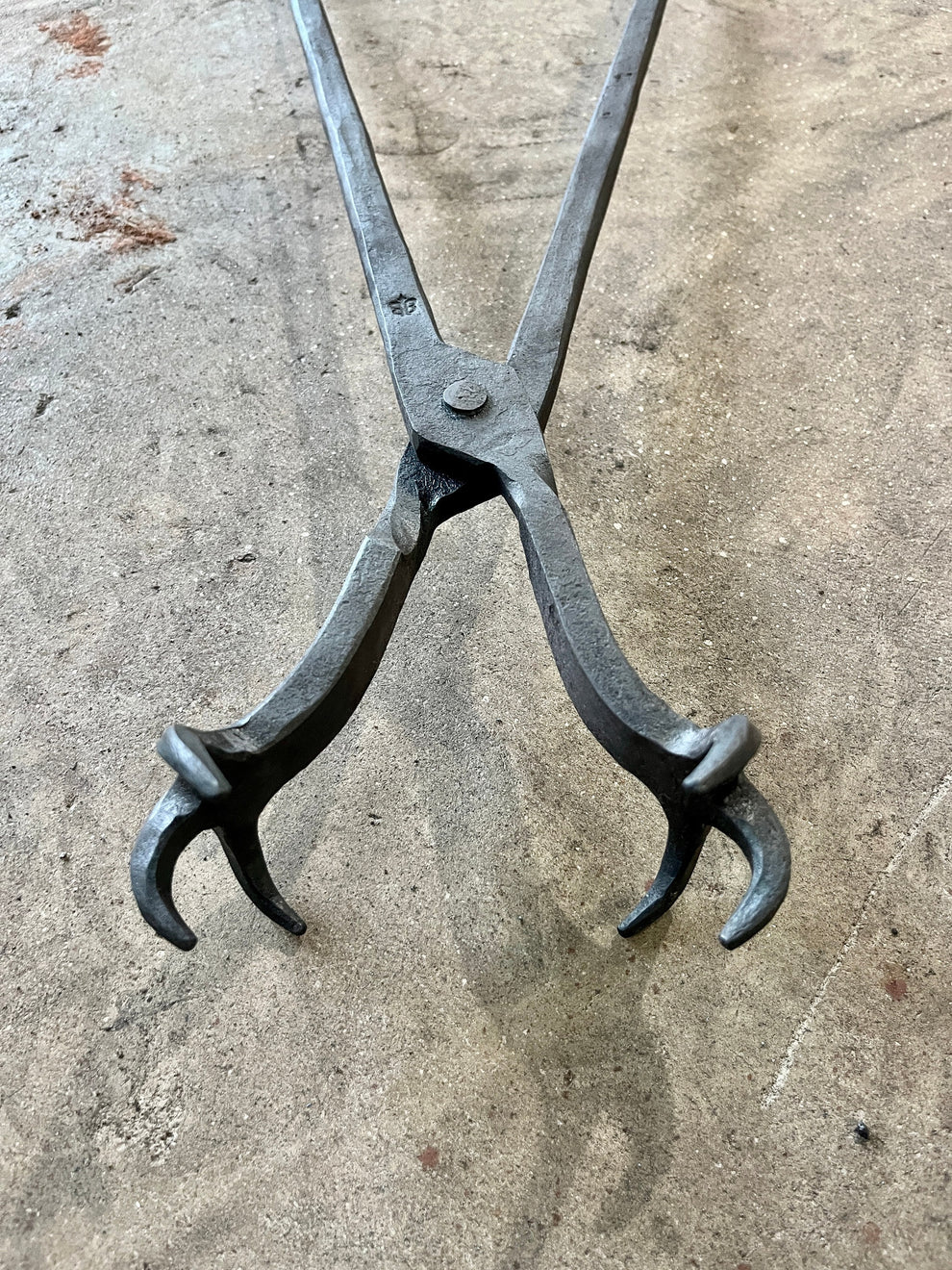
Studio NIN in Sakyo Ward occupies a refurbished machiya that once served as a textile workshop during the Meiji era. The current master smith trained under a lineage that traces back to Iga Province, the historical heartland of shinobi clans. The forge itself burns white oak charcoal in a traditional tatara-style box hearth, reaching temperatures near 1,200 degrees Celsius. Participants work with high-carbon steel blanks, hammering them over an anvil to achieve the characteristic three-point geometry of a shuriken or the tapered edge of a kunai. The process is tactile and exacting: each strike must land squarely, or the blade warps. The studio provides leather aprons, safety goggles, and tongs, but the hammering is done by hand. Most visitors leave with a functional throwing star or a small climbing spike, forged entirely by their own effort.
The experience also includes a demonstration of traditional heat-treating techniques, in which the blade is quenched in oil to lock in the hardness without brittleness. This step, called yaki-ire, determines whether a weapon will hold its edge under stress. The master smith explains the chemistry of carbon diffusion and grain structure, translating centuries-old empirical knowledge into modern metallurgical terms. For those curious about how much is a hand forged katana or how were katanas forged, the studio offers context on the broader Japanese bladesmithing tradition, though the focus remains on the shorter, simpler tools favored by covert operatives. The session runs 2.5 hours and accommodates up to six participants per group, ensuring close supervision at every stage of the forging process.

"Each strike must land squarely, or the blade warps."
A step-by-step walkthrough of Ninja Weapon Forging Kyoto tickets — what you'll see, how long each stage takes, and the details that matter.
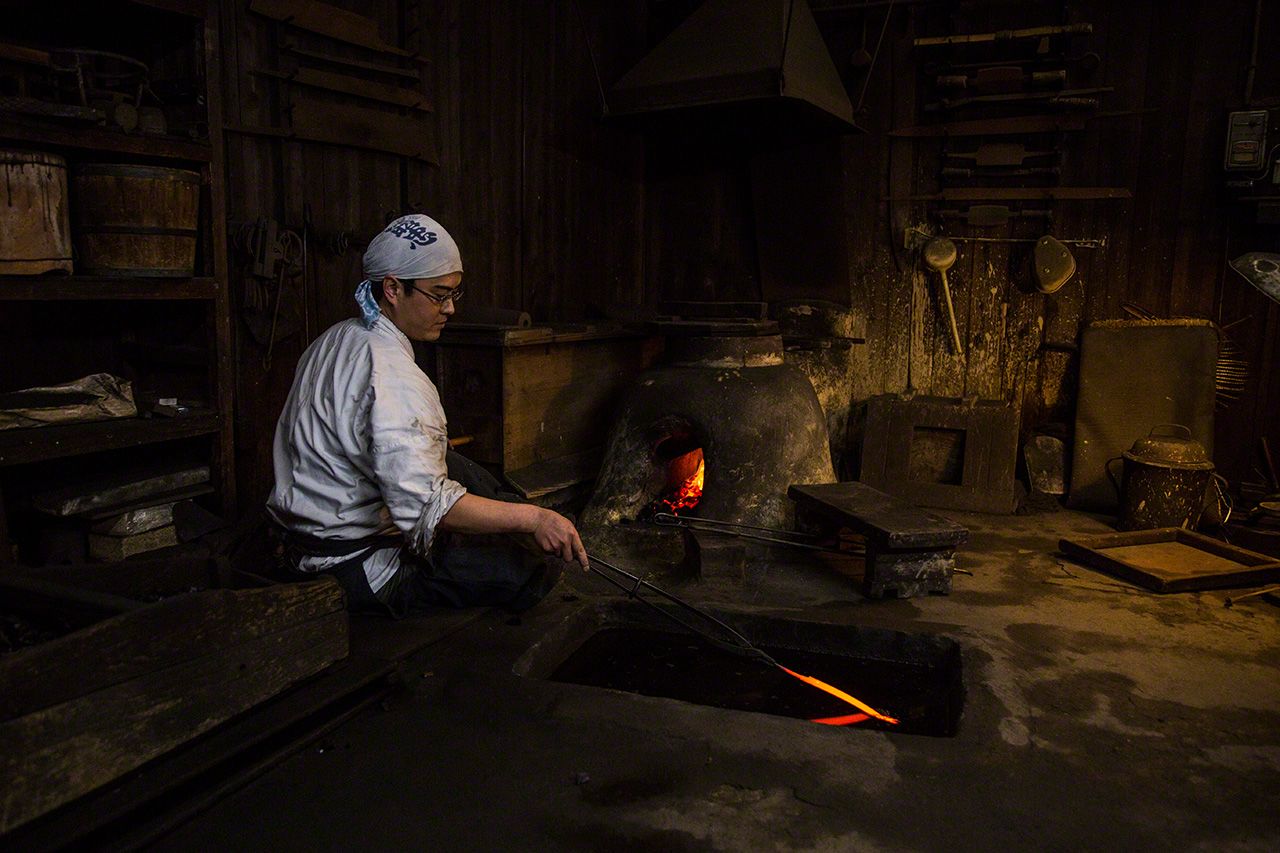
You arrive at Studio NIN in Sakyo Ward mid-morning, when the forge is already lit and the charcoal has burned down to a steady white glow. The master smith greets you at the entrance, hands you a leather apron, and leads you to the anvil. Your blank is a rectangle of high-carbon steel, cold and dull gray.
You place it in the hearth with tongs and wait as it climbs through orange to bright yellow. When the smith nods, you pull it out and begin hammering. The first strikes feel clumsy, but by the tenth blow you start to see the taper emerge. The steel flattens and spreads under the hammer, and you rotate it carefully to keep the geometry even.
After twenty minutes of heating and hammering, the rough shape is visible: a three-pointed shuriken with sharp tips. The smith takes it to the grinding wheel and smooths the edges, then hands it back for the final heat treatment. You plunge the blade into a trough of oil, and it hisses as the carbon locks into place. The surface darkens and hardens. You rinse it in water, dry it with a cloth, and weigh it in your palm. It is balanced, functional, and entirely your own work. You leave with the shuriken wrapped in paper, a small forged artifact that required no machinery, no automation, only heat and pressure and time.
The studio is open daily from 09:00–18:00. These hours apply every day of the week.
The experience price is 22,000 JPY per person, which covers all tools and materials. This is the official fee for all bookings.
The facility in Sakyo Ward may have limitations due to traditional architecture. Please inquire about specific access needs for your ninja weapon forging kyoto visit.
Bring your booking confirmation, valid ID, and wear comfortable, closed-toe clothing. Safety gear is provided during the ninja weapon forging kyoto process.
The activity is designed for older participants due to the equipment used. Ninja weapon forging kyoto tours are typically suitable for adults.
Photography is encouraged during your time at the studio. You are welcome to document your progress on your ninja weapon forging kyoto tour.
The best arrival window is 09:00–15:30. This ensures you have the full 2.5-hour duration to complete your project before closing.
Cancellations are managed through the official booking site. The 22,000 JPY fee is subject to the specific platform policy.
Food and drink are not permitted in the forging area. Please eat before arriving at the studio to ensure full focus.